Home / Hotels
HOTEL F&B POS · INDIA
Hotel POS for multiple restaurants — one guest bill
A hotel rarely has one kitchen. Breakfast, the all-day diner, the bar, and a specialty restaurant often share a guest who will not wait for three bills. QuickKOT centralised billing is the model for that property.
How the ticket splits in a hotel
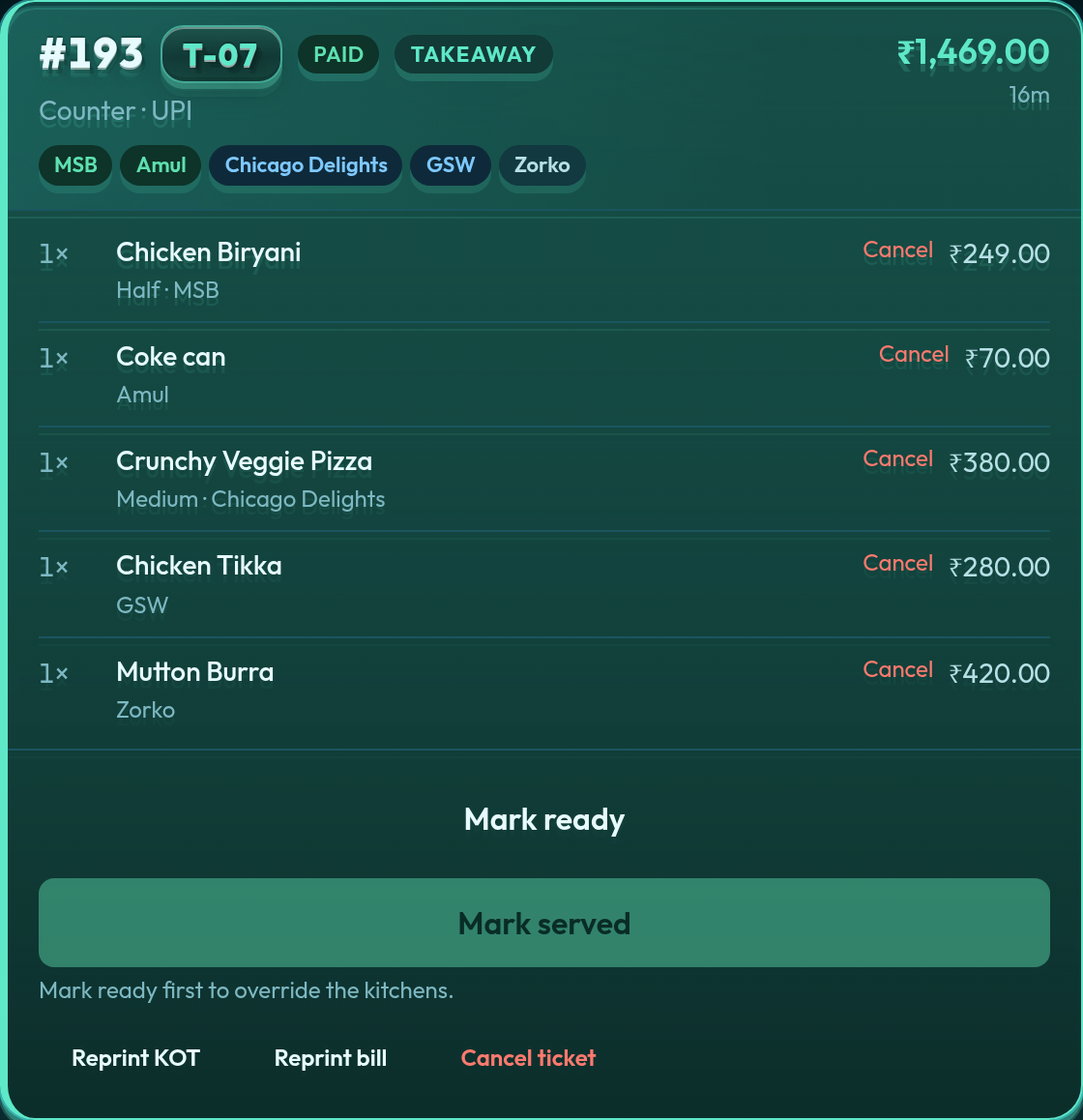
On Premium or Enterprise, choose Centralised at signup. You add stations — Coffee Shop, Indian, Chinese, Bar. Each category belongs to exactly one station. When the restaurant cashier rings biryani and a pour of wine on the same order, QuickKOT shows on kitchen display only the lines that kitchen owns.
The kitchen never sees the whole hotel. The guest still gets one GST invoice, with optional distinct GSTIN per kitchen when outlets are separate registrants under the same stay.
Handoff across restaurants
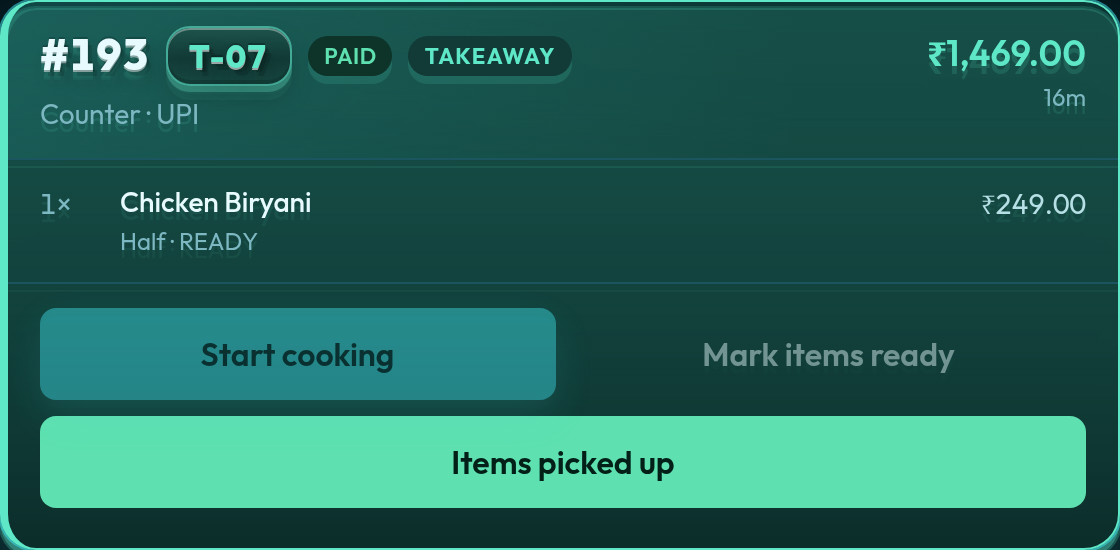
With more than one kitchen, service waits for the whole ticket: start cooking → mark ready → items picked up, per station. The F&B manager sees every kitchen on one card. Mark served waits until every kitchen has picked up. That is how a hotel coffee shop and a specialty restaurant close a shared cover without radio chatter.
The same numbers after close
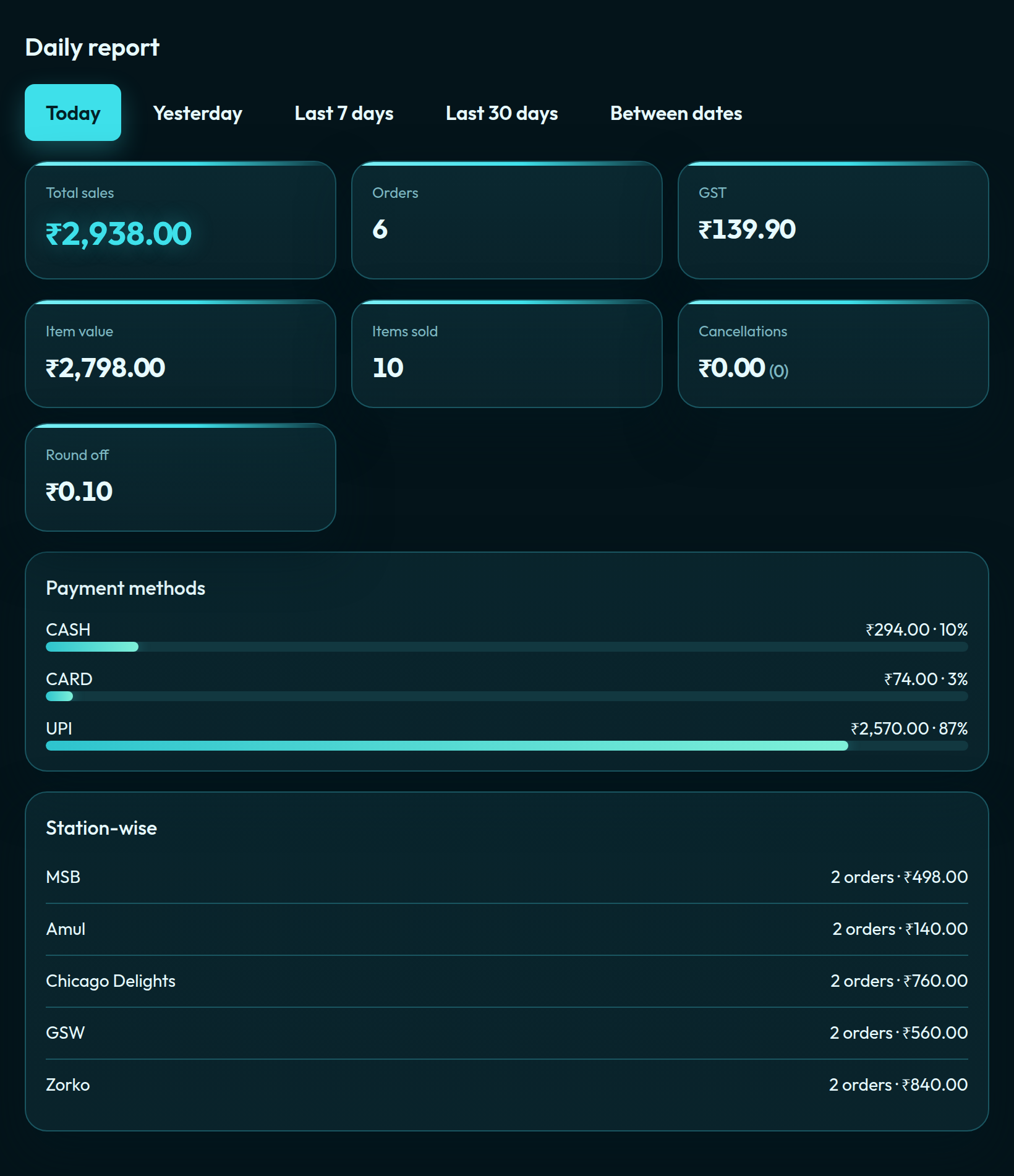
The daily report is station-wise: each restaurant’s item value, plus the property’s UPI / card / cash mix. A hotel GM sees the coffee shop versus the specialty restaurant without three POS vendors. Paying each kitchen after a shared guest check is vendor payout settlement — the report stays sales; the settlement is what you owe the vendor.
Hotel food hall vs a chain of hotels
Centralised billing is for one property. If you operate the same brand across cities and each hotel must bill under its own FSSAI / GSTIN with no shared tickets, that is Multi-Outlet. If the “restaurants” are stalls in a public food court, read food court POS — it is the same ticket model with tokens and Token Display.
Also on QuickKOT
Food courts
The flagship: centralised billing, stall tickets, Token Display.
Restaurants
Single kitchen, KOT, GST bills. Grows into multi-kitchen later.
Chains
Separate hotels or restaurants that must not share a till.
Plans
Premium starts at two kitchens; extras are ₹499 / month. Enterprise starts at five kitchens and ten users.
Hotel POS — questions
Can a hotel put several restaurants on one guest bill?
Yes. One POS, several kitchen stations, one GST invoice. Breakfast, the all-day diner, and the bar can share a check while each kitchen only sees its own lines.
Do hotel kitchens see each other’s tickets?
No. Categories are pinned to a station. The manager sees every kitchen on one card and marks served when the whole ticket is ready.
What if each restaurant is a different company?
Use Multi-Outlet instead of centralised billing. Centralised is for one operator, one guest check, many kitchens in the same property.