Home / Restaurants
RESTAURANT POS · INDIA
Free POS for restaurants — KOT, GST bills, kitchen display
Free POS for restaurants on Basic. A small kitchen does not need a mall-sized till. It needs the kitchen ticket to hit the cook before the guest sits down, a GST bill that will survive a casual inspection, and a floor two people can run at 1pm on Saturday.
Start where the floor actually is
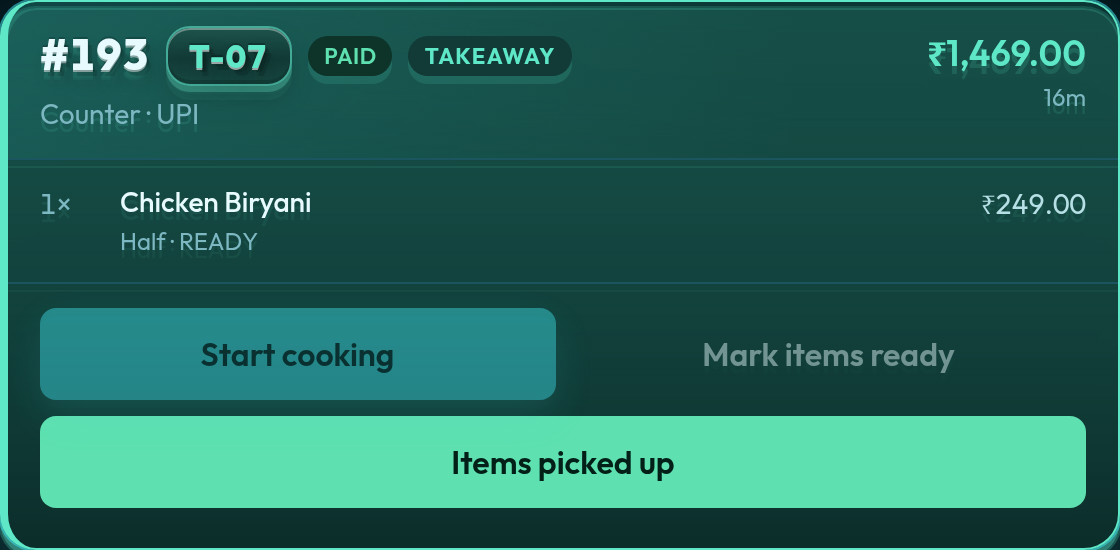
QuickKOT is free POS for restaurants on Basic: take the order, print a KOT, collect cash / card / UPI (or a split), then close the bill. Forty orders a day, one kitchen, one manager, postpaid tickets. You get restaurant details on the bill (name, address, FSSAI, GSTIN), tax rates you control, and completed orders if you need to change payment mode later.
When the floor grows, you do not rip the system out. Economy adds kitchen display, tables, discounts, stock alerts, and a full daily report with payment mix at 120 orders a day. Premium starts at two kitchens and three users; extra kitchens are ₹499 / month and extra users ₹199 / month. Enterprise is the same features with five kitchens and ten users by default. The same catalog — station → category → item — stays in place.
See the day, not a spreadsheet after close
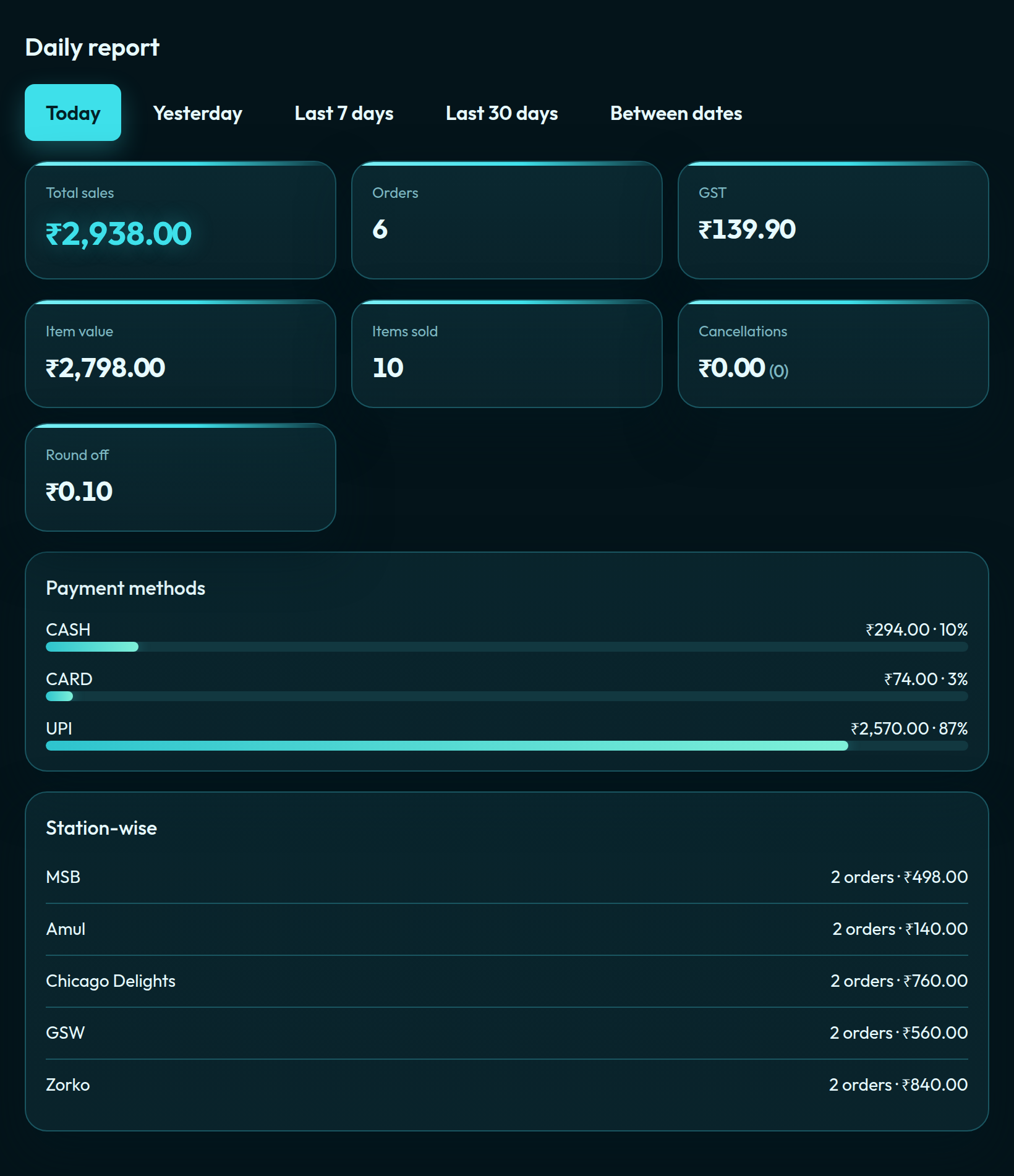
The daily report follows how guests actually paid — UPI, card, cash — plus GST and item value. That is the same report a food court uses station-wise when you add kitchens later.
When one kitchen is no longer enough
Cafés, sweet shops, dhabas, QSR counters, and 20-cover dining rooms start here. If you add a second kitchen in the same room and the guest still expects one bill, that is centralised billing — the food-court / hotel model. If you open a second restaurant in another city, that is Multi-Outlet. A 12-cover café that only needs a few dozen bills a day is the limited-order use case. When the dining room needs two bills at one table, or to move a party to a free four-top, that is merge and split restaurant tables on Economy and above.
Grow without changing software
Restaurant POS — questions
Is QuickKOT free POS for restaurants in India?
Yes. Free POS for restaurants on Basic: 40 orders a day, one kitchen, postpaid tickets, and GST / FSSAI on the bill. Economy adds kitchen display, reports, and prepaid at 120 orders a day.
Can a restaurant grow into a food court on the same POS?
Yes. Add kitchens on Premium or Enterprise and use centralised billing when you need one guest bill across stalls.
Does restaurant POS include merge and split tables?
Split and table transfer are on Economy and above. Merge is Multi-Outlet, same outlet. Basic lists tables but those ops stay locked. Floor examples: merge and split restaurant tables.